
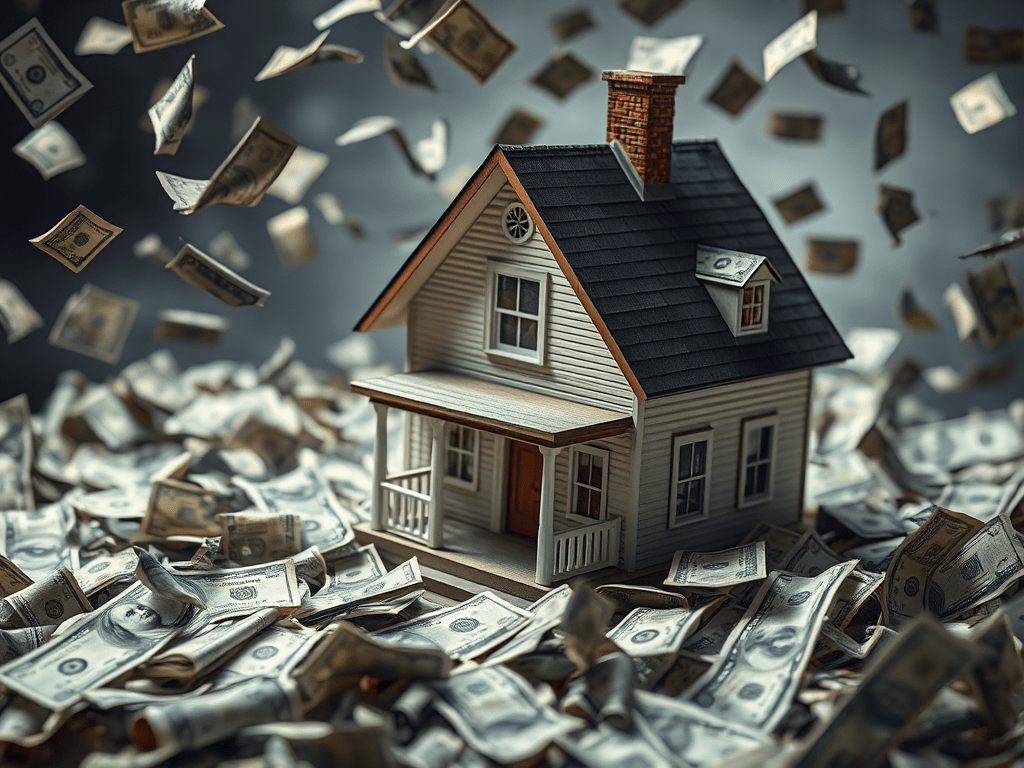
The 2008 housing crash, a pivotal event that triggered a global financial crisis, can feel complex. But at its heart, it was about a housing bubble, built on shaky foundations, that burst with widespread consequences, affecting millions of lives and shaking the very foundations of the global economy. Here’s a breakdown in simple terms, including how figures portrayed in “The Big Short” identified key triggers for the disaster, such as subprime mortgages, predatory lending practices, and the misuse of financial instruments like mortgage-backed securities. This event led to a cascading series of bank failures and governmental bailouts that reshaped financial regulations. Furthermore, a look at whether it could happen again reveals lessons learned and lingering vulnerabilities in the housing market, as well as what to watch for, such as rising interest rates, speculative buying, and the potential for another bubble to form amidst shifting economic conditions. Understanding these factors can help us better navigate the complexities of our current economic landscape.
What Happened in 2008? Imagine a Perfect Storm:
- Easy Money & The Housing Boom: For years leading up to 2008, it became incredibly easy to get a home loan. Interest rates were low, and lending standards were significantly relaxed. This fueled a massive demand for houses, pushing prices up and up. It felt like a sure bet – buy a house, and its value would only increase. This created a “housing bubble.”
- Subprime Mortgages – The Risky Loans: A key, and ultimately toxic, ingredient was the boom in “subprime” mortgages. These were loans given to people with lower credit scores or less ability to prove their income – traditionally considered riskier borrowers. Often, these loans had low introductory “teaser” interest rates that would later jump significantly, making payments unaffordable for many.
- Slicing and Dicing the Risk (or so they thought) with CDOs: Wall Street got creative (and reckless). Banks didn’t just hold onto these mortgages. They bundled thousands of them together – good ones, bad ones, and many ugly subprime ones – into complex financial products called Collateralized Debt Obligations (CDOs).
- These CDOs were like a fruitcake, with different “slices” or tranches. The safest, top tranches (often rated AAA, meaning super safe) were supposed to be paid first from the mortgage payments coming in. The riskiest, bottom tranches (often B-rated or unrated) would take the first hit if homeowners started defaulting.
- The problem was, many of these CDOs, even the supposedly “safe” tranches, were packed with far more risky subprime mortgages than investors realized. Rating agencies, who are supposed to assess the risk of these products, often gave them unjustifiably high ratings. These CDOs were then sold to investors worldwide (pension funds, other banks, individuals).
- The Bubble Bursts: Eventually, the inevitable happened:
- Interest Rates Rose: Those teaser rates on subprime loans ended, and monthly payments skyrocketed.
- Housing Prices Stalled and Fell: The constant price increases couldn’t last forever. As prices stopped climbing and began to fall, people couldn’t easily sell their homes for a profit if they got into trouble with payments. Many found themselves owing more on their mortgage than their house was worth (“underwater”).
- Defaults Soared: Many homeowners, especially those with subprime loans they couldn’t afford, started defaulting on their mortgages – they stopped paying.
- The Domino Effect:
- CDO Value Plummeted: As defaults increased, those CDOs, particularly the tranches built on subprime mortgages, became nearly worthless. The “safe” AAA tranches often turned out to be anything but.
- Banks in Trouble: Financial institutions holding massive amounts of these now-toxic CDOs faced huge losses. Some major, historic firms collapsed (like Lehman Brothers) or needed massive government bailouts.
- Credit Freeze: Banks became terrified to lend money to each other and to businesses, leading to a “credit crunch.” It was like the oil in the engine of the economy suddenly dried up.
- Global Recession: This financial chaos spilled over into the broader economy, causing widespread job losses, business failures, and a deep global recession (often called the Great Recession).
“The Big Short” and the Triggers of the Crisis:
The movie “The Big Short” tells the story of a few investors who saw this disaster coming because they identified key triggers and vulnerabilities in the housing market and the financial products built upon it.
- Seeing the Underlying Flaw (The Main Trigger): The primary trigger for their investigation was the realization by people like Dr. Michael Burry (played by Christian Bale) that the mortgages underlying many of these supposedly “safe” CDOs were incredibly risky and highly likely to fail. They saw that the lending standards had collapsed, and millions of subprime loans were essentially ticking time bombs.
- CDO Structure as a Trigger for Cascading Failure: The way Collateralized Debt Obligations (CDOs) were structured was a crucial element. These CDOs were built in layers or tranches, from the riskiest (equity tranche, then mezzanine tranches like BBB-rated) to the supposedly safest (senior tranches like AAA-rated).
- The characters in “The Big Short,” like Mark Baum’s team (based on Steve Eisman), realized that a relatively small percentage of defaults in the underlying mortgages would be enough to trigger the complete wipeout of the lower tranches of a CDO.
- Crucially, they also understood (or came to discover) that these CDOs were often so poorly constructed and so interconnected, with even supposedly safe tranches containing repackaged risky mortgages from other CDOs (sometimes called CDO-squared), that once defaults reached a certain point, it would trigger a cascade of failures. The failure of the lower tranches would quickly trigger losses and downgrades in the higher-rated, supposedly “safer” tranches, causing them to become worthless as well. This domino effect was a key trigger for the wider financial collapse.
- Fraud and Misrepresentation as Triggers: The movie also highlights how widespread fraud, misrepresentation by lenders, and the complicity of rating agencies (who gave high safety ratings to junk products) were critical triggers. The investors realized that the official story about the safety of these products didn’t match the reality on the ground. Discovering this disconnect was a trigger for their conviction to bet against the market.
- How They “Shorted” the Market – Credit Default Swaps (CDS): Recognizing these triggers, these investors used Credit Default Swaps (CDS) to bet against these doomed CDOs.
- Think of a CDS as an insurance policy. The investors paid a regular fee (like an insurance premium) to big banks. In return, the banks agreed to pay them a large sum of money if specific CDOs defaulted or their value plummeted (which would happen when the underlying mortgage defaults triggered the CDO’s failure).
- Essentially, they were buying insurance on financial products they knew were designed to fail once the initial triggers (like rising interest rates on adjustable-rate mortgages or falling house prices) hit the subprime borrowers.
- Why the Short Interest Was Significant:
- It Highlighted the Rot: The very act of these investors seeking to make such large bets against the housing market, based on these identified triggers, was a massive red flag that something was deeply wrong.
- Profits Exposed the Scale of Failure: The huge profits made by the “shorters” when these triggers led to the market’s collapse underscored the immense losses on the other side.
- Patience in the Face of Inaction: They had to wait for these triggers to fully play out, often while the market continued to appear irrationally strong, demonstrating how disconnected asset prices had become from underlying fundamentals.
Could It Happen Again? And What to Look For:
While experts generally agree that the exact same scenario as 2008 is less likely due to some changes, a future housing downturn or even a crisis isn’t impossible.
Why it might be different now:
- Stricter Lending Standards (Generally): It’s harder to get a mortgage now than it was in the mid-2000s. Lenders typically require more proof of income, better credit scores, and larger down payments. The riskiest loan types are far less common.
- Better Capitalized Banks: Banks are generally required to hold more capital as a buffer against losses, making them more resilient.
- More Regulatory Scrutiny (in theory): There’s increased oversight of financial products and institutions, though the complexity of the financial system remains a challenge.
- Different Market Dynamics: Recent housing price increases in many areas have been driven by factors like low supply, demographic shifts, and (until recent years) very low interest rates, rather than solely by the kind of outrageously lax lending seen before 2008. (Note: As of mid-2025, market conditions may have evolved, but these were key differentiating factors in the years following 2008).
Conditions that could signal trouble (some may sound familiar):
- Rapidly Soaring Home Prices Decoupled from Incomes: If home prices are increasing at a much faster pace than average wages for a sustained period, it creates an affordability crisis and can indicate a speculative bubble.
- Look for: Price-to-income ratios in your area becoming significantly higher than historical norms. A widespread belief that “prices will only go up.”
- Widespread Loosening of Lending Standards: If it suddenly becomes much easier to get a loan with very little down payment, minimal income verification (“stated income” loans), or if there’s a surge in loans to borrowers with poor credit, this is a major warning sign.
- Look for: The return of “creative” or extremely risky mortgage products being heavily marketed.
- Increase in Risky Loan Products: A proliferation of adjustable-rate mortgages (ARMs) where the initial payment is very low but can balloon dramatically, or interest-only loans becoming mainstream again.
- Look for: A significant rise in the market share of mortgages that defer principal payments or have high-risk adjustment features.
- Rampant Speculation and Excessive House Flipping: When homes are increasingly bought not to live in, but as short-term investments to be sold quickly for a profit (“flipping” driven by expectation of rapid price rises, not value added through renovation), it can artificially inflate prices.
- Look for: A sharp increase in investor buying, particularly by those with short holding periods, and a “get rich quick” mentality around housing.
- Rising Inventory and Falling Demand: If the number of homes for sale starts to significantly outpace the number of buyers, prices can begin to fall. This can be triggered by higher interest rates, an economic downturn, or overbuilding.
- Look for: Homes sitting on the market for much longer periods, a growing number of price reductions, and declining home sales figures.
- Economic Downturn and Significant Job Losses: A recession often leads to job losses. When people lose their jobs, they can no longer afford their mortgage payments, leading to defaults and foreclosures, which puts downward pressure on home prices.
- Look for: Rising unemployment rates, negative GDP growth, and declining consumer confidence.
- Sharp and Sustained Increases in Interest Rates: Higher mortgage rates make buying a home more expensive. If rates rise too quickly, it can dramatically cool demand and potentially lead to price corrections, especially if prices were previously inflated by ultra-low rates.
- Look for: Mortgage rates climbing to levels that significantly reduce affordability for the average buyer.
- Return of Complex, Opaque Financial Products Tied to Mortgages: If new types of mortgage-backed securities or derivatives become popular that are hard to understand and obscure the underlying risks, it’s a cause for concern.
- Look for: Financial institutions heavily promoting new, complex ways to invest in bundled mortgage debt, especially if their risk isn’t transparent.
It’s crucial to remember that housing markets are local and influenced by many factors. Not every warning sign will lead to a crash, but a combination of these conditions would certainly increase the risk of a significant downturn. Staying informed about these broad economic and market indicators can help in understanding potential future shifts.

Leave a comment